2.8.2. Rodent Toxicity
ADMET Predictor includes models for ten different toxicity endpoints in rodents: skin sensitization in mice ([Sens_Skin]); respiratory sensitization in rats ([Sens_Resp]); acute oral toxicity in rats (Rat_Acute), mice (Mouse_Acute), guinea pig (Guinea_Pig_Acute), and rabbit (Rabbit_Acute), rabbit acute dermal toxicity (Rabbit_Dermal), rat acute inhalation toxicity (Rat_Pulmonary) and toxicity under chronic dosing (i.e., carcinogenicity) in rats (Rat_TD50) and mice (Mouse_TD50). All predict assay results that serve as surrogates for potential human toxicity in a regulatory context. Identifying potential endocrine disruptors may also be relevant in anticipating rodent test results; models relevant to those endpoints are described in the Ecotoxicity section.
Skin sensitization
A skin sensitizer is a substance that induces cutaneous allergic reactions. During the past decade the murine local lymph node assay (LLNA) has proven to be a useful tool in assessing the relative potency of compounds as skin sensitizers for risk assessment purposes and it has been recently recommended as a validated method for the determination of the relative potency of skin sensitizing chemicals. Details regarding LLNA standards and applicability domain can be found on the National Toxicology Program website.
The endpoint of the LLNA is the EC3, the estimated concentration of a chemical required to produce a 3-fold stimulation of draining lymph node cell proliferation in mice compared with concurrent controls is used to divide compounds into classes of sensitizers and non-sensitizers. Compounds with an EC3 less than or equal to 10% are considered sensitizers (positives) and those greater than 10% are not (negatives).
As literature data was significantly skewed (80%) toward sensitizing compounds (Gerberick 2005; Roberts 2007), several known drugs and other compounds known not to have any issues with cutaneous or other allergies were included to balance the data set. In its entirety 292 compounds were used to build and validate both 2D and 3D versions of the Sens_Skin model. 20% and 30% of the data was set aside as an external test set for the 2D and 3D models, respectively.
High concordance on the external test sets are exhibited by both Sens_Skin models.
|
Model |
Set |
Negatives |
Positives |
Total |
Correct |
Concordance |
Sensitivity |
Specificity |
|---|---|---|---|---|---|---|---|---|
|
Sens_Skin
|
**Training ** |
83 |
153 |
236 |
217 |
91.9% |
92.8% |
90.4% |
|
Test |
15 |
41 |
56 |
48 |
85.7% |
82.9% |
93.3% |
|
|
Sens_Skin
|
**Training ** |
83 |
151 |
234 |
216 |
92.3% |
93.4% |
90.4% |
|
Test |
15 |
43 |
58 |
52 |
89.7% |
90.7% |
86.7% |
Respiratory sensitization
Another aspect of allergenic reactions to drugs, addressed by our Sens_Resp model, is respiratory sensitization. A data set of 80 compounds commonly used to model this endpoint consists of 40 sensitizers identified through inhalation studies in rats and 40 of 118 nonsensitizers which were not skin sensitizers (Graham 1997). Most of the sensitizers in this overly-simplified data can, however, be assigned to some mechanistic domain (acylation, Michael addition, Schiff base formation, SN2, or SNAr) using SMARTS rules to classify the compounds (Enoch 2010).
We broadened the chemistry space by adding compounds from the Association of Occupational and Environmental Clinics (AOEC) database as well as known drugs and excipients which are components of inhaled drugs for respiratory disorders. The latter can safely be assumed to not be respiratory sensitizers. The AOEC has published more up to date definitions inclusive of respiratory sensitizers and identified a list of over 400 "asthmagens." Asthmagens are broken down into classes: sensitizer-induced asthma, substances inducing reactive airway dysfunction syndrome (RADS), substances that meet both criteria, those that meet neither criterion, and substances generally accepted as safe.
In total, the data set ultimately used consisted of 193 nonsensitizers (negatives) and 117 respiratory sensitizers (positives) curated from the aforementioned sources. A Sens_Resp model with 8 neurons and 13 inputs was developed that exhibits 89% concordance on the training/verify set and 85% concordance on the external test set.
|
Model |
Set |
Negatives |
Positives |
Total |
Correct |
Concordance |
Sensitivity |
Specificity |
|---|---|---|---|---|---|---|---|---|
|
Sens_Resp |
Training |
144 |
92 |
236 |
212 |
89.8% |
89.1% |
90.3% |
|
Test |
49 |
25 |
74 |
63 |
85.1% |
80.0% |
87.8% |
Acute toxicity in rats
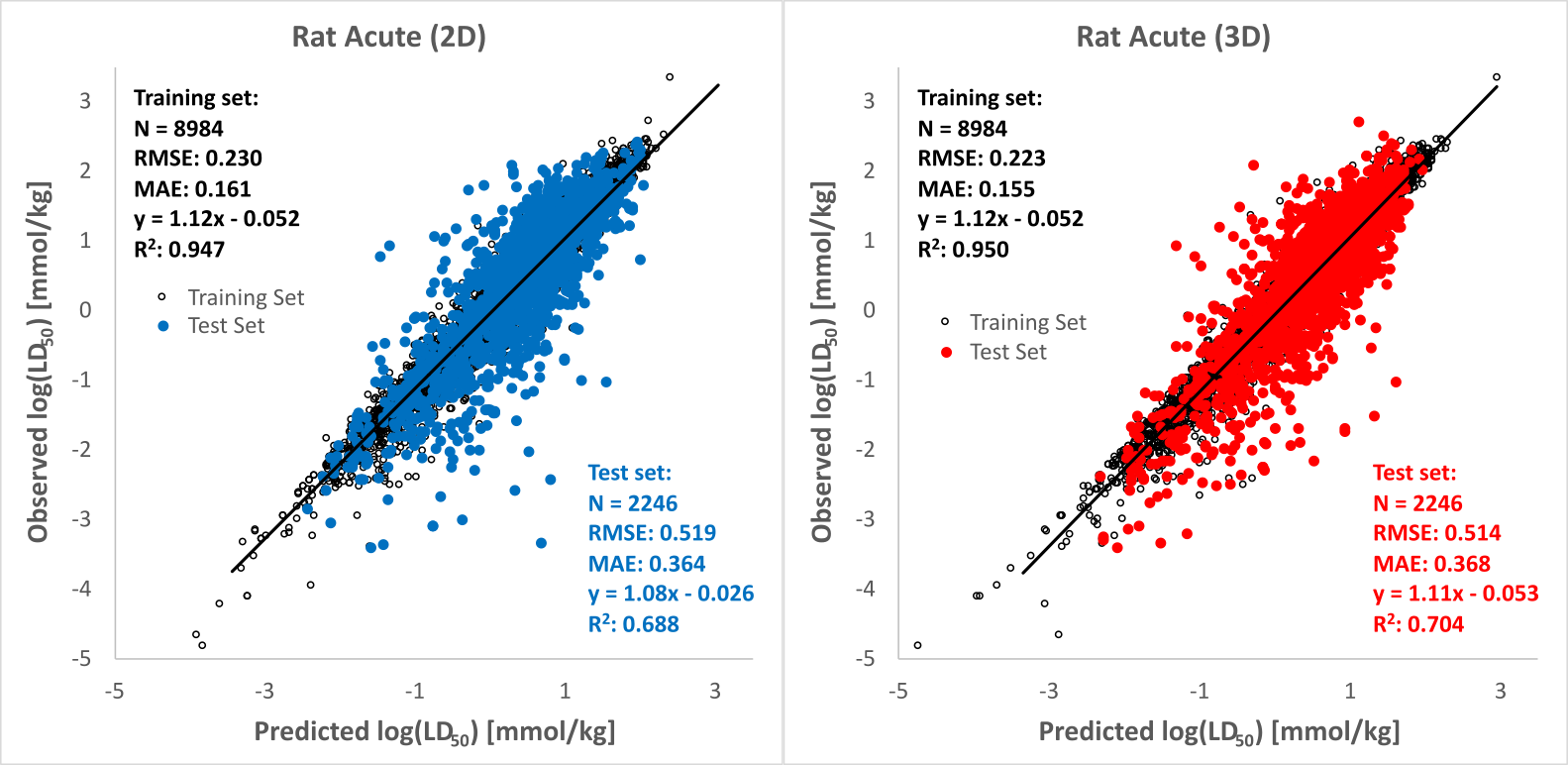
The acute rat toxicity model (Rat_Acute) is based on the amount of orally administered chemical (in mg/kg body weight) required to kill 50% of the rats tested. The mode of lethality is ignored, which poses a challenge to modeling the endpoint well. Data comes from two sources, the highly overlapping RTECS (Registry of Toxic Effects of Chemical Substances) data set (version previously owned by the Center for Disease Control’s National Institute for Occupational Safety and Health) and the ChemIDplus database.
A total of 11,230 unique compounds were selected and used to model the endpoint LD50 in mmol/kg. The final results are converted and presented as LD50 in the original units of mg/kg, which are more pertinent in a regulatory context. In both 2D and 3D models at least 20% of the compounds were set aside for the external test sets prior to training the models. The XGBoost regression models had complete coverage and were able to make predictions having an RMSE of approximately 0.51 log units for both 2D and 3D test sets.
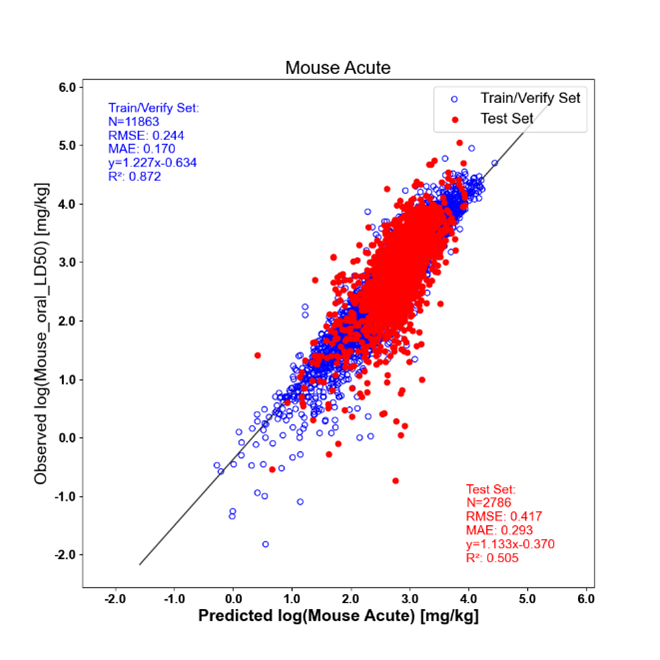
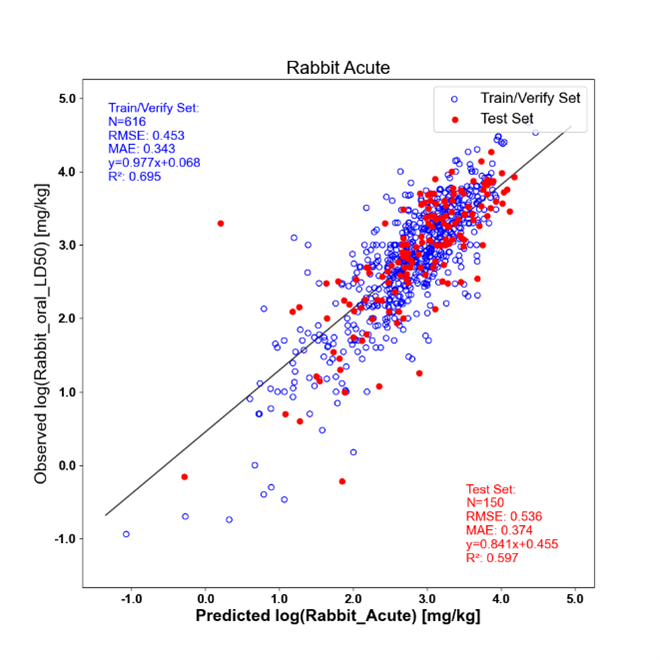
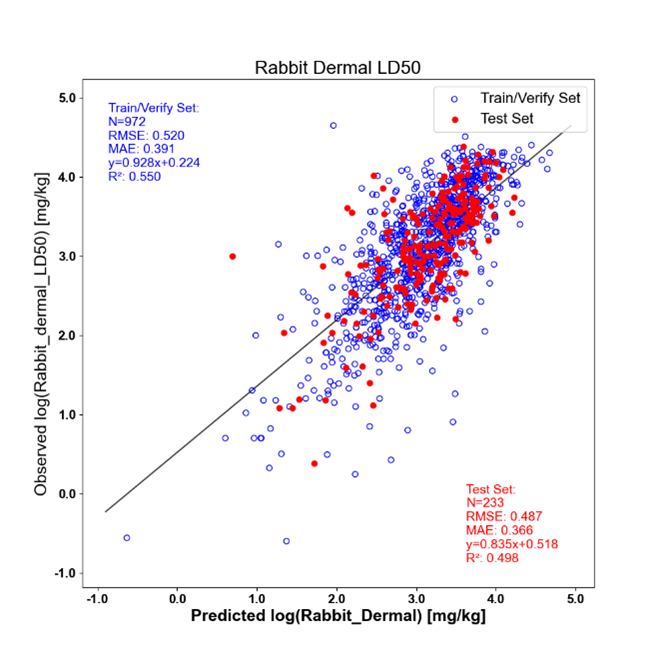
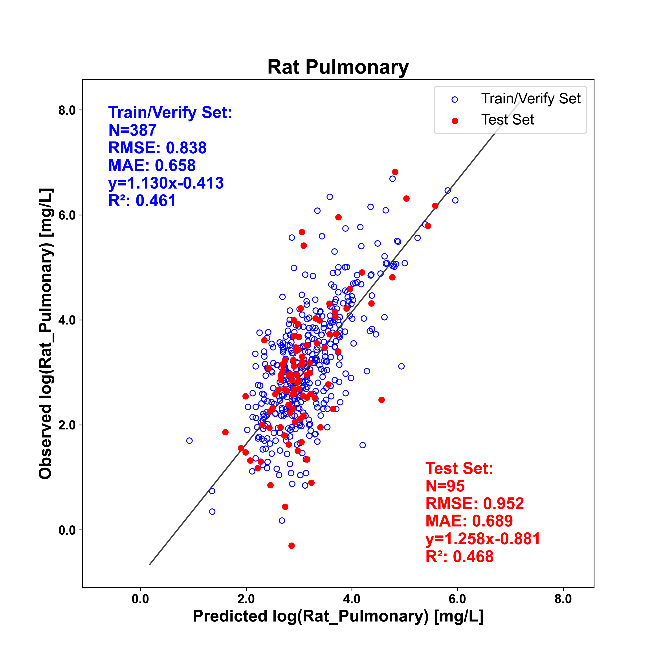
Five new rodent acute toxicity models were added in ADMET Predictor 13. The data used for the new rodent toxicity models originates from version 9.4 of the Toxicity Value Database (ToxValDB), a comprehensive and standardized compilation of in vivo toxicology data designed to support human health assessments. This version integrates data from over 40 toxicology databases and repositories. Specific datasets were extracted based on exposure route, animal, assay conditions and other factors. SMILES strings were extracted from PubChem using the dtxsid value provided by ToxValDB. SMILES strings were read into ADMET Predictor using the “Remove common fragments” option. The structures were then searched for compounds that contained non-organic atoms, e.g., Fe. Compounds that contained non-organic elements (Fe, Gd, etc.) were then removed from the data set. The remaining compounds were “desalted”. The structures were then neutralized, and functional groups and tautomers were standardized. Duplicate structures (ignore stereochemistry) were identified and grouped together. If the toxicity values in a set of duplicates were within 2-fold then the lowest LD50 or LC50, i.e., the most toxic, was retained for modeling. Otherwise, the data was not used for modeling.
Below is a list of the endpoints extracted from ToxValDB:
-
Guinea pig oral LD50
-
Mouse oral LD50
-
Rabbit oral LD50
-
Rabbit dermal LD50
-
Rat inhalation LC50
Each dataset was divided into training and test set and XGBoost models were created. ANNE regression models were then created using the same training and test sets. The test set statistics for XGBoost and ANNE models were compared, and the best model was added to ADMET Predictor. The XGBoost model produced better statistics for the Mouse oral LD50 endpoint. The ANNE test statistics were better for the other four models.
Below is a plot of the log of the guinea pig LD50 values versus the log of our Rat_Acute model.
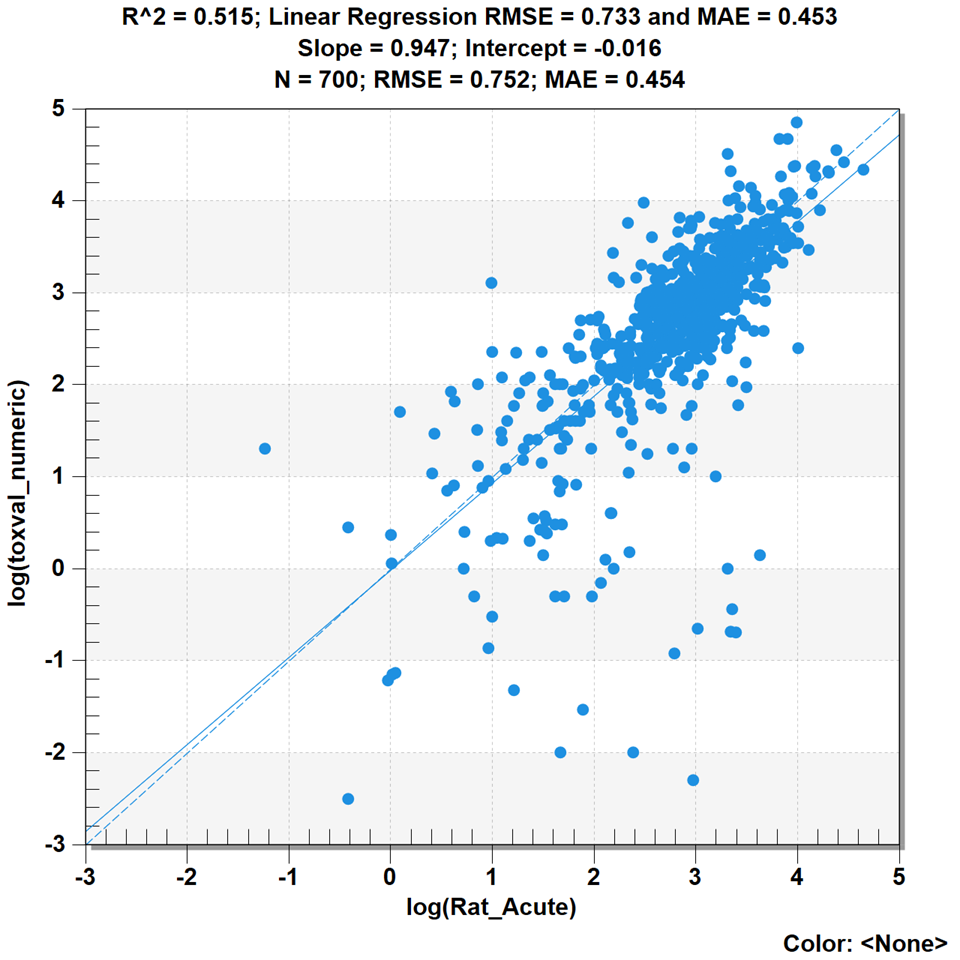
The strong correlation between the values suggests that acute toxicity observed in one species may be extrapolated to another. Thus, DELTA models using the Rat_Acute model as a reference were created and compared to standard models. The DELTA models produced the best models for guinea pig, rabbit oral and dermal LD50 endpoints.
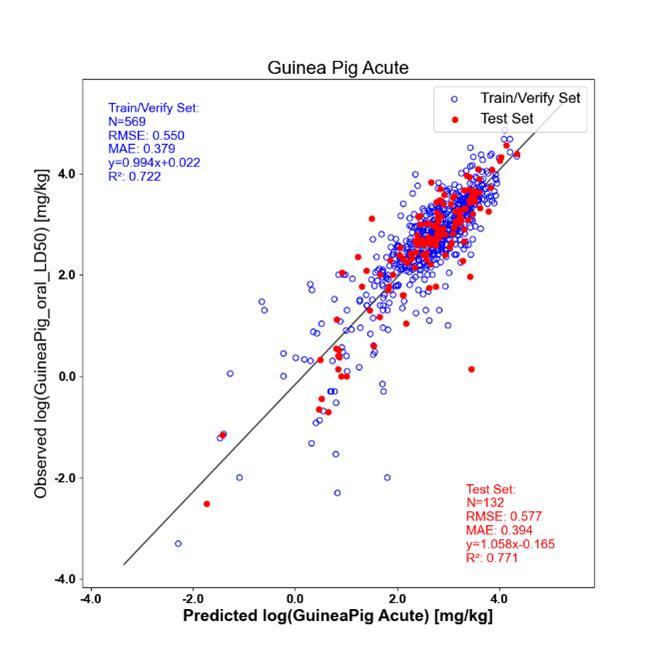
Below are observed versus predicted plots for rodent acute toxicity.
Chronic toxicity (carcinogenicity)
ADMET Predictor’s chronic rodent toxicity models are built using data from the Carcinogenic Potency Database (CPDB). The CPDB is a curated archive of compound names and tumorigenesis data that is available through the Environmental Protection Agency’s DSSTox program. It was compiled by the laboratory of Lois Swirsky Gold at the University of California Berkeley Lab and continues to be expanded as of this writing. As noted by the DSSTox program staff, the CPDB “includes detailed results and analyses of more than 5,000 chronic, long term carcinogenesis bioassays reported in over 1,200 papers in the general literature and more than 400 Technical Reports of the National Cancer Institute/National Toxicology Program.”
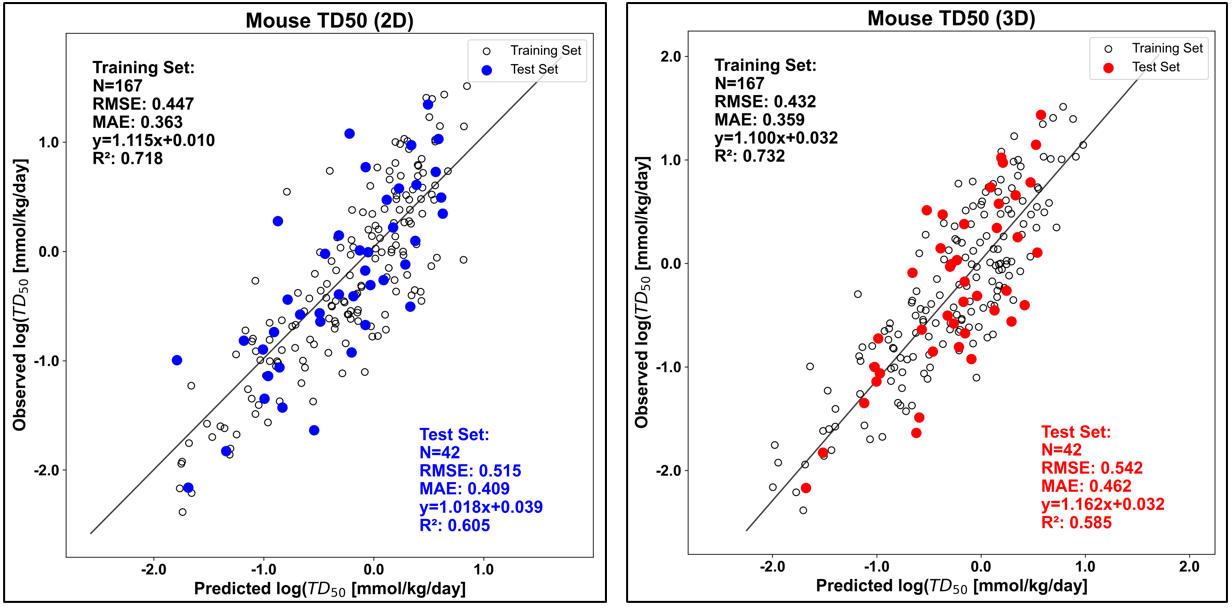
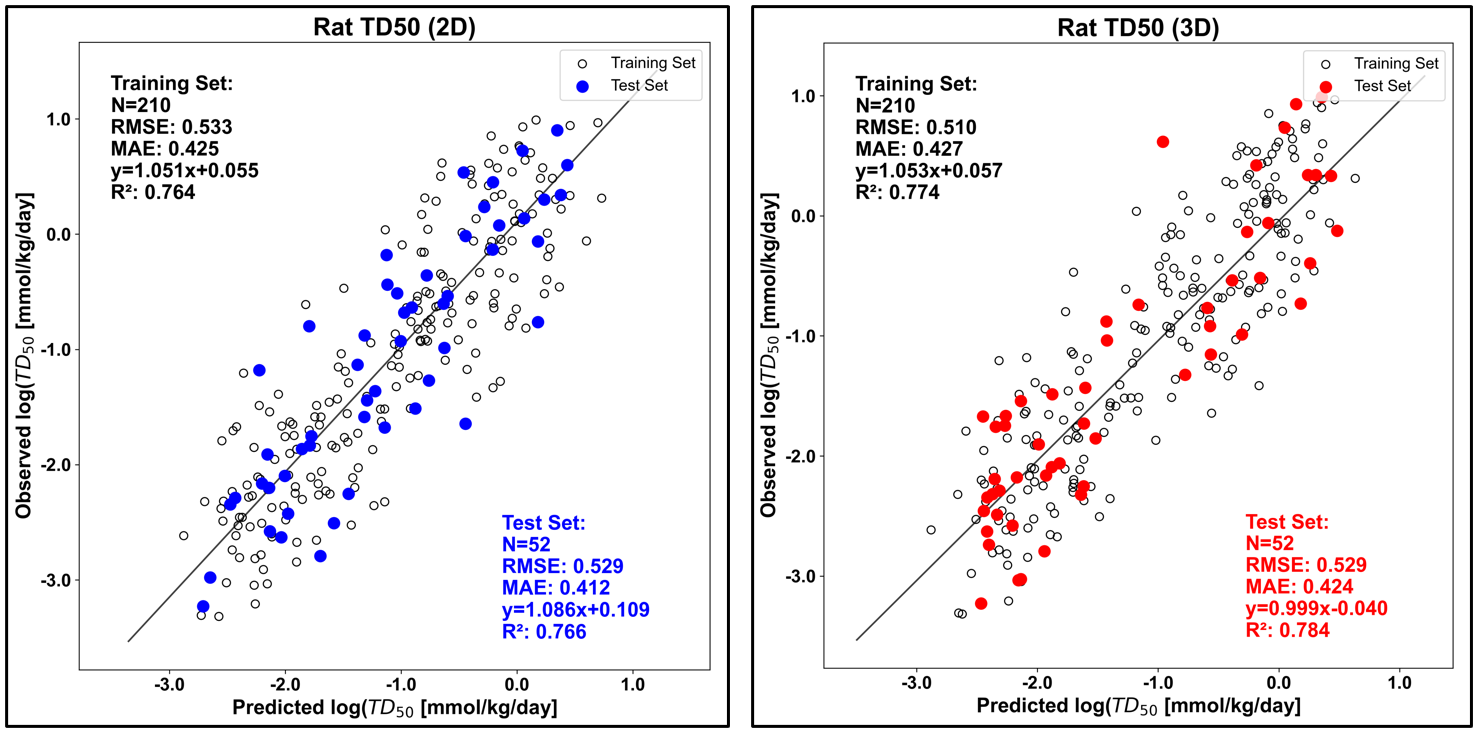
Two carcinogenicity models based on this data are available in ADMET Predictor. Rat_TD50 predicts the TD50 for a particular compound in units of mg/kg/day, where TD50 is the oral daily dose administered over the course of their lifetimes required to produce tumors in 50 percent of the population.
The model was developed in log space and units of mmol/kg/day, so the antilog of the model output is multiplied by molecular weight to give the units of mg/kg/day that are appropriate for most regulatory applications.
A carcinogenicity model is also provided for chronic oral dosing in mice. Mouse_TD50 predicts the TD50 value in mice, also in mg/kg/day. As for [Rat_TD50], the model was built on log(mmol/kg/day) and its output scaled to units of mg/kg/day.