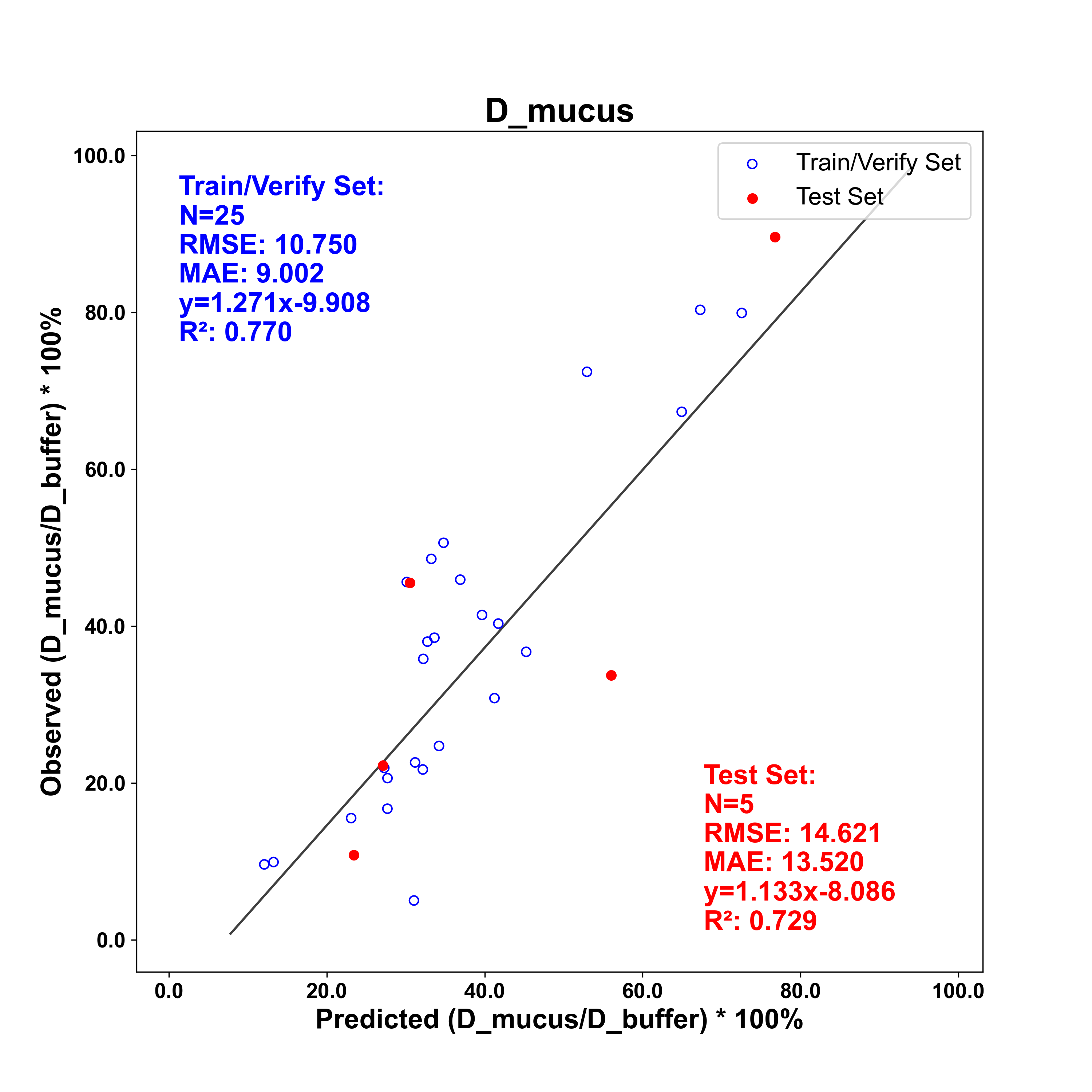
The rate of drug diffusion in mucus is important for PK (pharmacokinetic) modeling because mucus often acts as the first transport barrier between the site of administration and the epithelial surface where absorption or action occurs. If diffusion through mucus is slow or restricted, it can become a rate-limiting step that directly shapes exposure profiles.
The fact that for solutes the drug diffusion in the mucus is not related to size only has long been described in the literature (Desai et al. 1991a, Desai et al. 1991b, Khanvilkar et al. 2001, Larhed et al. 1997, Larhed et al. 1998, and Sigurdsson et al. 2013). [1-6]. These discrepancies are thought to be related to the drug charge at the pH of the mucus as well as drug lipophilicity since the mucus in contact with the GI fluids in normal conditions comprises a monolayer of bile salts and about 37% w/w lipids in terms of dry weight. We identified 33 compounds in the literature with diffusion data in native pig mucus (not purified, not diluted) and built a DELTA ANNE model on the diffusion in mucus relative to the diffusion in buffer ((D_mucus/D_buffer) * 100%), using the water diffusion coefficient model (DiffCoeff) as a reference. Using a DELTA model brings in additional information from the reference model to improve the quality of the model built on a small number of compounds. See the DELTA theory section of the manual for more information. The number of compounds used for training and test sets, as well as quality metrics are shown in the figure below.